I have seen many strong SaaS opportunities stall not because sales lacked urgency, but because procurement lacked enough clarity to move with confidence. In my experience, a pilot can disappear into a long approval cycle when a vendor treats procurement like a final obstacle instead of an internal partner with a specific job to do. If I want a SaaS pilot to move forward without freezing sales momentum, I need to understand what procurement actually needs, what risk they are trying to reduce, and what kind of package makes their work easier rather than harder.
When I think about a pilot approval, I do not see a paperwork exercise. I see a decision point where trust, timing, and business value have to come together. Sales wants speed. Procurement wants control. Finance wants predictability. Security wants reassurance. Legal wants clean terms. If I ignore any one of those concerns, I create friction. If I prepare for all of them early, I give procurement a path to say yes without turning the pilot into a month-long negotiation.
What procurement really needs before approval
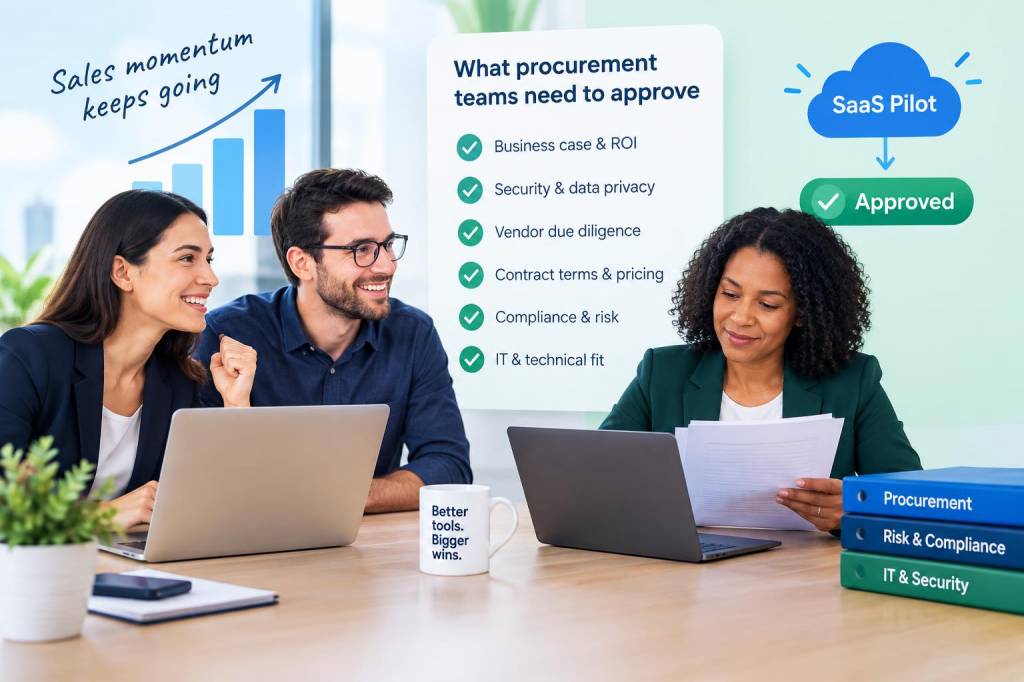
Procurement teams usually do not block a pilot because they dislike the product. They pause because they need enough information to justify a low-risk decision. I have learned that they are usually asking a small set of practical questions:
When I make these answers easy to find, procurement can move faster. When I make them hard to assemble, they need to chase internal stakeholders, and that is where momentum gets lost. A smart sales team does not wait for procurement to ask every question. It anticipates the approval checklist and sends a complete package from the start.
The approval package I would want to receive
If I were sitting in procurement, I would want a pilot request that feels structured, concise, and credible. I would want a short business case, a scoped pilot plan, and a clear map of risk. In practice, that means I need to provide more than a pricing sheet. I need to give procurement a decision kit.
My approval kit would include a one-page summary explaining the business objective, the sponsor, the pilot duration, the expected users, and the success metrics. I would also include a simple explanation of the data flow, since many delays come from uncertainty around where information travels. If the pilot does not require sensitive data, I say that plainly. If it does, I specify the safeguards in language procurement can share internally without rewriting my explanation.
I also make sure my contract terms are pilot-friendly. A pilot should not look like a full enterprise rollout with hidden commitment risk. If the pilot is time-limited, I state that clearly. If it auto-renews or converts into a paid subscription, I explain the trigger. If the customer can walk away at the end of the trial, I make that obvious. Clarity reduces review cycles more than persuasive language ever will.
What slows sales momentum and how I avoid it
The biggest threat to sales momentum is not a “no.” It is ambiguity. A vague pilot scope invites internal debate, and internal debate slows everything down. I have seen deals lose energy because nobody could answer basic questions about ownership, timeline, data, or future pricing. If I want procurement approval without stalling sales, I need to remove ambiguity before it reaches the approval stage.
I also avoid forcing procurement to discover the business value by themselves. Sales conversations often focus on product features, but procurement thinks in terms of process, risk, and governance. If I can connect the product to a measurable business outcome, procurement has something concrete to present upstream. That might be time saved, error reduction, pipeline impact, better customer response times, or lower operational cost. The stronger the link to a business result, the easier it is for procurement to defend the pilot.
Another slowdown comes from mismatched urgency. Sales may want an answer in days, but procurement may need a cross-functional review. I respect that reality by setting expectations early. I ask what approval path is likely, who needs to weigh in, and what documents they usually require. Then I work backward from that process instead of pushing for a shortcut that creates resistance.
Security, privacy, and legal concerns I address early
Procurement rarely acts alone. In many companies, the real delay comes from the need to coordinate security, privacy, and legal review. I have found that the faster I answer these concerns, the smoother the procurement path becomes. A pilot may be small in scope, but if the vendor cannot explain access controls, retention policies, or support practices, the risk can still feel large.
I like to prepare a standard set of responses before the first formal review. That usually includes:
When I present these materials early, I signal maturity. Procurement teams do not expect perfection, but they do expect readiness. If I am vague, they assume I am hiding complexity. If I am organized, they are more likely to trust the pilot structure.
How I keep the pilot small without making it feel weak
A small pilot is easier to approve, but only if it still feels meaningful. I have learned not to present a pilot as a vague experiment. I frame it as a controlled test with a clear hypothesis. For example, I might define a single team, a narrow use case, and a measurable success threshold. That gives procurement confidence that risk is contained while still showing the sales side that the opportunity is real.
I also make the commercial path simple. If the pilot succeeds, what happens next? Procurement wants to know whether they will need a new approval cycle, whether the discount changes, whether the contract expands, and whether the vendor can scale with the company. If I can explain that path now, I make future buying easier too.
In my experience, the strongest pilots are not the biggest ones. They are the ones designed with enough precision that everyone knows what success looks like and what the next step will be. A carefully scoped pilot can create internal champions faster than a broad, undefined trial.
What I share with procurement before they ask
I try to think like a procurement partner, not a seller trying to win a shortcut. That means I share the information I know they will need before they spend time asking for it. A few documents or answers can remove days from the process. I usually prepare a concise set of materials that includes a business case, pilot timeline, product summary, support contact, data handling note, and commercial outline.
I also make the internal sponsor look good. Procurement often needs a business owner who can explain why the pilot matters. If I help that sponsor articulate the value in clear language, the approval process becomes easier. In practice, I give them a short paragraph they can reuse, a few outcome metrics, and a realistic explanation of why now is the right time.
That internal sponsor is often the difference between momentum and delay. Sales can build trust with the sponsor, but procurement needs a credible internal advocate who can carry the case forward. I never assume that enthusiasm alone will survive the approval chain. I equip the sponsor with the facts they need to keep the conversation moving.
| What procurement wants | What I provide | Effect on approval speed |
|---|---|---|
| Clear business purpose | One-page pilot summary with measurable outcomes | Fewer internal questions |
| Risk visibility | Security, privacy, and legal materials ready in advance | Shorter review cycles |
| Commercial clarity | Pilot fee, duration, exit terms, and next-step pricing | Less contract back-and-forth |
| Internal ownership | Named sponsor and implementation contact | Better cross-functional coordination |
| Low operational burden | Simple onboarding and limited user scope | Faster operational sign-off |
Why sales and procurement work better when I treat them as allies
I have found that the healthiest deals happen when sales and procurement do not behave like opponents. Sales brings urgency and vision. Procurement brings discipline and accountability. Both are necessary. If I treat procurement like a roadblock, I invite defensiveness. If I treat procurement like a strategic partner, I make it easier for them to help the deal move forward.
That mindset changes how I communicate. I stop trying to “push through” approval and start trying to make approval easy. I use plain language. I avoid inflated claims. I explain the pilot in business terms. I reduce uncertainty wherever I can. That approach may feel slower at first, but it usually creates a faster total cycle because fewer surprises appear later.
I also stay honest about what the pilot is and is not. If it is a genuine test, I say so. If there is a commercial expectation after the pilot, I say that too. Procurement appreciates transparency more than sales language that sounds polished but hides detail. In my experience, clarity is not a soft skill in this process. It is an acceleration tool.
What I ask internally before sending anything to procurement
Before I send a pilot for approval, I ask myself whether I have answered the questions that would matter if I were on the other side of the table. I want to know whether the request is easy to understand, easy to defend, and easy to route. I want to know whether the pilot is scoped tightly enough to feel safe but broad enough to prove value. I want to know whether every major stakeholder can see their role without needing a separate explanation.
When I get those elements right, procurement does not need to slow sales momentum. It can support it. That is the real objective: not bypassing control, but designing the pilot so well that control and speed work together. If I respect procurement’s job, I make it easier for them to approve the experiment, and I keep the commercial conversation alive while the review happens.