Sports play an important role in French school life, shaping not only students’ physical health but also their social development, discipline, and sense of belonging. In France, physical education is more than a break from academic lessons. It is part of the educational culture and is treated as an essential component of a child’s growth. From primary school to lycée, students are regularly encouraged to move, compete, cooperate, and discover different athletic activities. This approach reflects a broader French belief that education should develop both the mind and the body.
For many international families, the place of sports in the French education system can be surprising. School days in France are often associated with strong academic expectations, but physical activity remains deeply integrated into the timetable. Children are not only taught basic movement skills; they are also exposed to a variety of sports, from gymnastics and athletics to team games and swimming. These experiences help students build confidence, resilience, and a healthy lifestyle from an early age.
Sports as part of the French educational philosophy
In French schools, sports are not viewed as optional extras. They are considered a necessary part of a complete education. The French system traditionally values balance, and physical education supports that idea by helping students stay active while also learning respect for rules, effort, and teamwork. Teachers often use sports to teach broader life lessons, such as perseverance after failure, cooperation with others, and the importance of self-control.
This philosophy begins early. Even in primary school, children are introduced to physical games and structured movement activities. As they progress into middle school and high school, the curriculum becomes more organized and demanding. Physical education classes are assessed, just like other subjects, which shows how seriously they are taken within the system. For many students, sports are one of the most enjoyable parts of the school week, but they are also a serious educational tool.
The structure of physical education in schools
Physical education in France is known as EPS, which stands for Éducation Physique et Sportive. EPS is compulsory throughout most of the school years and is taught by specialized teachers. The lessons are designed to develop a wide range of physical and motor skills. Rather than focusing only on one discipline, French schools usually rotate through several activities during the year.
Depending on the school, students may participate in athletics, swimming, gymnastics, football, basketball, handball, volleyball, dance, and even outdoor endurance activities. The variety is intentional. It allows students to discover different forms of movement and helps ensure that each child finds an activity in which they can succeed. Schools also adapt their program according to available facilities, regional resources, and age group.
Assessment is based on effort, progress, technical performance, and understanding of the rules. This means that physical education is not reserved for naturally athletic students. Everyone is expected to participate, and individual improvement is often valued as much as competitive ability.
How sports are introduced in primary school
At the primary level, the aim is to give children a positive experience of movement. Lessons are playful and varied, with an emphasis on coordination, balance, and basic motor development. Children may run, jump, throw, catch, climb, or dance as part of their regular school activities. Teachers use games and group exercises to make physical activity enjoyable and accessible.
Swimming is especially important in many regions of France. Schools often organize swimming lessons because they are seen as a life skill as well as a sport. Learning to move safely in water is considered essential, and many schools work with local pools to provide supervised sessions. This emphasis on safety and practical skills is one of the distinctive features of sports in French education.
At this age, the purpose is not to create elite athletes. Instead, schools want children to become comfortable with movement, learn to follow instructions, and enjoy being active with others. These early experiences often shape a lifelong relationship with sport.
Sports in middle school and high school life
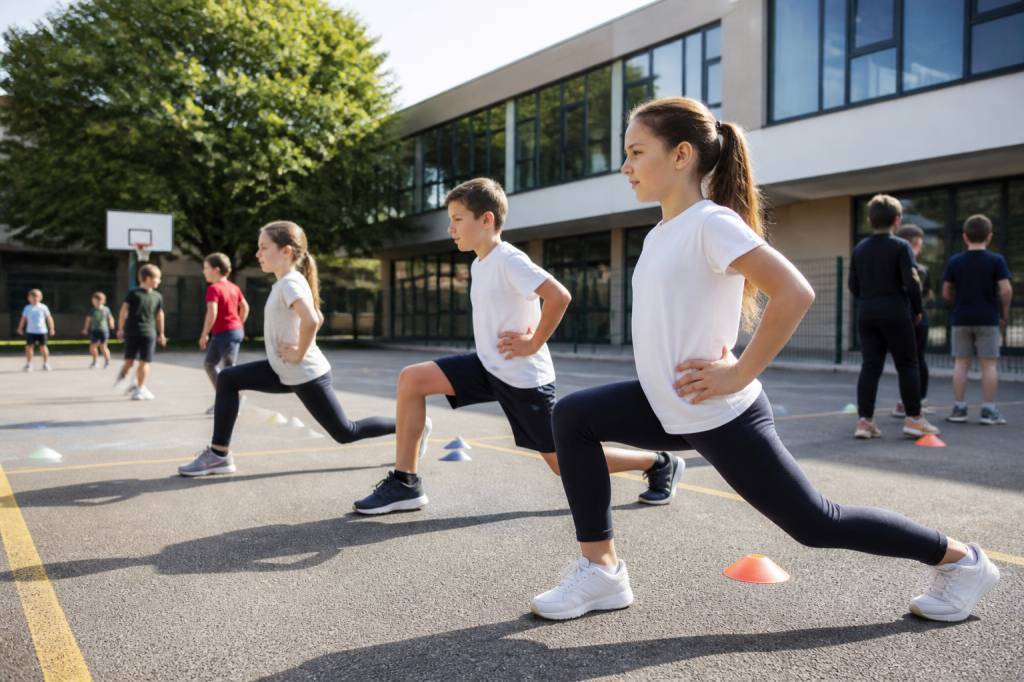
As students move into collège and lycée, the role of sports becomes more structured. Physical education classes become more demanding, and students are expected to demonstrate better technique, endurance, and tactical understanding. Team sports become more common, and pupils may also be asked to reflect on strategy, fair play, and the organization of games.
At this level, sports can also become a social space. Students work with classmates they may not know well in other subjects, which helps build group cohesion. Team games encourage communication and collaboration, while individual sports teach self-discipline and personal responsibility. For many teenagers, EPS offers a welcome change from classroom-based study and a chance to release energy in a structured environment.
In some schools, sports are linked to optional programs, clubs, or special schedules that allow more intensive practice. Students who are especially interested in athletics may join school teams or associations. This creates an environment where both casual participation and higher-level performance can coexist.
For families comparing systems across countries, a resource such as french school can help provide useful insight into how the French academic environment works in practice, including the place of physical education and extracurricular life.
The role of school sports clubs and associations
Beyond compulsory PE classes, French schools often have sports associations known as UNSS in secondary education. These associations organize training sessions, interschool competitions, and local tournaments. They give students the opportunity to practice sports outside normal class hours and to represent their school in a more competitive setting.
These clubs are an important part of school culture. They create a sense of identity and belonging while also helping students build friendships across grade levels. A student might take part in handball on Wednesday afternoon, compete in athletics at the weekend, or join a swimming competition against another school. These activities are often managed by teachers who are passionate about sports and who encourage participation for all skill levels.
School sports associations also help students learn how to manage commitments. Balancing academic work with training and competition teaches time management and responsibility. For some pupils, these clubs become a central part of their school experience.
Sports facilities and the school environment
The quality of sports facilities in French schools varies, but most schools try to provide access to essential equipment. Larger schools may have gymnasiums, outdoor courts, athletics tracks, or nearby sports complexes. In urban areas, schools often use municipal facilities through partnerships with local authorities. In rural settings, open spaces and community sports grounds may play an important role.
Because sports are integrated into school life, access to facilities matters a great deal. Teachers plan their lessons around what is available, and schools often organize transportation to swimming pools, stadiums, or specialized venues. This cooperation between schools and local communities is one reason why sports remain visible and active throughout the French school system.
The school environment itself also encourages movement. Recess, lunch breaks, and outdoor areas give students opportunities to run, play, or socialize physically. While the school day can be academically intense, moments of activity are built into the routine.
The social benefits of sports in French schools
Sports in French school life are not only about fitness. They play a major role in social development. Team activities encourage students to speak, listen, and cooperate. Children who may be shy in class can sometimes feel more comfortable expressing themselves on the sports field. Shared victories and defeats create memories that strengthen friendships and group identity.
Sports can also help reduce tension between students. Physical activity gives young people a constructive way to channel energy and manage stress. This is particularly important in secondary school, when academic pressure begins to increase. A well-run sports lesson can improve concentration, reduce anxiety, and contribute to a more positive classroom atmosphere afterward.
French schools also use sports to promote values such as respect and fairness. Students learn to accept decisions, follow rules, and recognize the importance of discipline. These lessons extend beyond sport and into daily life. In this way, sports support both personal development and school culture.
Gender, inclusion, and access to sport
French schools have made strong efforts to make sports accessible to all students, regardless of gender, background, or physical ability. Girls and boys generally follow the same physical education curriculum, which supports equality and shared experience. Schools are also increasingly attentive to inclusion, offering adapted activities for students with disabilities or medical restrictions.
In some cases, teachers modify exercises to ensure that every student can take part safely and meaningfully. The goal is not to exclude but to adapt. This inclusive approach reflects the modern French emphasis on equal opportunity in education. While challenges remain, especially in terms of access to facilities or differences in athletic confidence, schools continue to work toward broader participation.
There is also growing awareness of the importance of encouraging students from all backgrounds to enjoy sport. Whether a child comes from a family with strong athletic traditions or not, the school environment provides a shared entry point into physical activity.
Sports and academic balance
One of the most interesting aspects of French school life is the balance between academic rigor and physical education. The school system is known for its demanding standards, but sports help provide counterweight and rhythm. They remind students that learning is not limited to books and tests. Physical activity develops other forms of intelligence, including spatial awareness, coordination, decision-making, and resilience under pressure.
Parents often appreciate this balance. They may value strong academic performance, but they also understand that children need movement and social interaction to thrive. Sports contribute to emotional well-being and can improve motivation in other subjects. Students who regularly exercise may sleep better, concentrate better, and feel more confident overall.
In some cases, talented student-athletes can follow more flexible pathways that support both study and training. This is especially true for teenagers with strong competitive ambitions. Schools may help them manage their schedules so they can continue pursuing sport without neglecting education.
The cultural importance of team spirit
French school sports often emphasize collective effort rather than individual glory. Even when a student performs very well on their own, the group remains central. This reflects a broader cultural preference for organization, fairness, and shared responsibility. Students are encouraged to understand their role within a team and to contribute to a common objective.
Team spirit is especially visible in games like handball, football, and volleyball, which are popular in many French schools. These sports require communication, quick thinking, and mutual trust. Teachers often use them to teach pupils how to cooperate under pressure and how to support classmates in difficult moments.
In school ceremonies, tournaments, and competitions, the sense of belonging can be very strong. Students are proud to represent their class, their school, or their region. This emotional connection gives sports a deeper meaning than simple recreation.
Why sports remain central in French school life
Sports remain central in French school life because they serve so many purposes at once. They promote health, teach discipline, create social bonds, and support academic balance. They are also easy to connect to broader educational goals such as equality, inclusion, and personal growth. By making physical education compulsory and offering extracurricular opportunities, French schools send a clear message: a good education includes the body as well as the mind.
For students, this means school is not only a place for writing, reading, and memorizing. It is also a place to run, swim, play, compete, and discover what the body can do. For families, it means that French education offers a rich and structured environment where children can develop in more than one direction at the same time.
Whether through weekly PE classes, school competitions, swimming lessons, or sports associations, physical activity is woven into the rhythm of the French school year. It is one of the most visible ways in which the educational system supports the development of the whole child.
That presence of sport is part of what makes French school life distinctive. It helps students build habits that last beyond the classroom and gives them opportunities to grow in confidence, cooperation, and independence. In many ways, it is one of the strongest examples of how education in France combines tradition, structure, and a commitment to the well-rounded development of young people.